
Why Frances Neagley Hates Physical Touch in ‘Reacher’: Her Haphephobia Explained
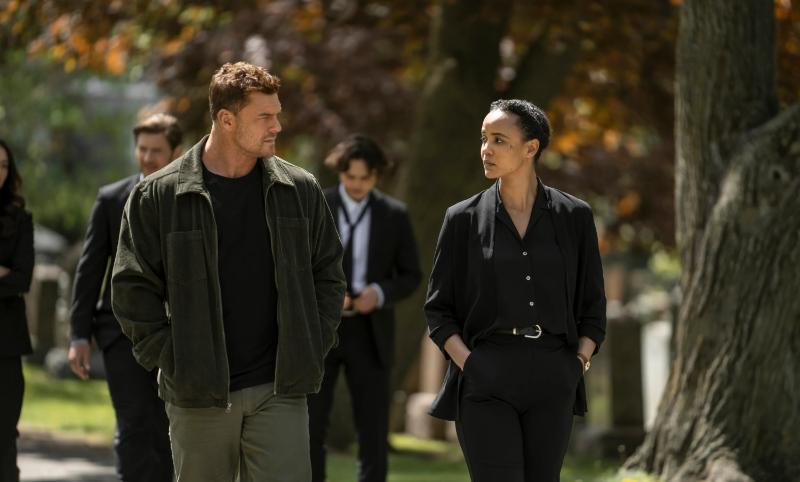
Prime Video’s adaptation of the Lee Child literary canon into ‘Reacher’ quickly established itself as one of the streaming landscape’s most formidable action franchises. Driven by bone-crunching combat sequences and meticulous military tradecraft, the series captivated audiences worldwide while assembling a gritty ensemble around its nomadic titan.
Among the rotating cast of allies drifting in and out of Jack Reacher’s wandering existence, private investigator Frances Neagley emerged as the definitive emotional anchor of the wider saga. Portrayed with razor-sharp charisma by actor Maria Sten, the former Master Sergeant earned immediate critical praise for matching her mentor’s lethal efficiency while navigating the civilian intelligence apparatus.
Behind her calculated exterior, however, lies an unmistakable idiosyncrasy that defines how she moves through every environment: Neagley cannot stand physical contact. Throughout her appearances across both print and screen, she systematically evades casual hugs, refuses routine handshakes, and enforces a strict perimeter around her body that keeps colleagues and strangers at arm’s length.
This deep-seated aversion is clinically known as haphephobia, an intense anxiety disorder characterized by an overwhelming, irrational dread of being touched. In Lee Child’s source novels, Jack Reacher often steps in to clarify this condition to bewildered strangers, ensuring people do not mistake her physical boundary for hostility or professional disrespect.
The Literary Roots of Neagley’s Haphephobia
Within the original novels, including standout entries like ‘Without Fail’ and ‘Night School’, Child chose to present her phobia as a fundamental aspect of her personality rather than an enigma waiting to be resolved. When senior intelligence officials probe whether her intense aversion stemmed from past physical assault, Reacher matter-of-factly explains that she claims she was simply born with it.
By keeping the psychological origins opaque on the page, Child created an unbreakable boundary that preserves her mystery and protects her autonomy from intrusive romantic subplots. Reacher respects her boundaries unconditionally, replacing traditional greetings with subtle nods or synchronized elbow bumps that reflect a profound mutual trust between two former military operatives.
Unpacking Trauma and Empathy on Television
When transitioning the character to television, series creator Nick Santora honored this defining trait as a fundamental cornerstone of Neagley’s emotional architecture. Rather than treating her haphephobia as an obstacle or an eccentric punchline, the series frames her space as an untouchable fortress that commands absolute respect from those who work beside her.
That established discipline made a pivotal sequence in the second season of ‘Reacher’ one of the most heartbreaking moments across the entire franchise. When a mortally wounded Detective Guy Russo was dying on the pavement after saving an innocent girl, Neagley chose to overcome her physical revulsion by taking his hand, demonstrating that her fear could never stifle her deep human empathy.
The adaptation further enriched her personal boundaries by explicitly confirming that Neagley identifies as aromantic and asexual during a candid conversation with Karla Dixon. Her complete lack of romantic interest complements her tactile aversion, establishing an empowering female hero who values deep camaraderie while remaining entirely liberated from conventional romance expectations.
How ‘Neagley’ Explores the Origins of Her Phobia
Neagley quickly grew so compelling that Amazon greenlit an expansive standalone vehicle dedicated exclusively to her life and private investigations company in Chicago. As Variety first reported, showrunners Nick Santora and Nicholas Wootton developed the spinoff series ‘Neagley’ to place the stoic investigator front and center in her own conspiracy.
Stepping into the spotlight finally gave the creative team permission to peel back the emotional scars that Lee Child left unexamined in his books. When the suspicious death of childhood companion Tommy Crane pulls her into a shadowy conspiracy, Neagley is forced to confront buried personal memories that trace directly to the origins of her fear.
Sten welcomed the chance to bring those internal defense mechanisms into full view after seasons of keeping them quietly locked behind closed doors. Reflecting on bringing that psychological battle forward, Sten admitted, “I always was doing that work and bringing that whatever was underneath the surface. But it’s just so exciting to be able to dive into it and play the actual scenes where we get to uncover that and we get to see that side of her that she’s been hiding,” in a video interview with CBR.
Ultimately, Frances Neagley does not like to be touched because the physical barrier represents an emotional shield forged by severe early trauma. That inviolable boundary serves as a testament to her agency and resilience, illustrating that profound connections do not require touch to remain unbreakable.
Share your thoughts on Frances Neagley’s emotional journey, strict boundaries, and haphephobia in the comments below!
Have something to add? Let us know in the comments below!