
The True Story Behind Netflix’s ‘Monster: The Lizzie Borden Story’
The landscape of true crime television has transformed over the past decade, moving beyond straightforward documentary procedurals to dissect the deep psychology beneath notorious tragedies. High-profile dramatizations captivate millions of streaming viewers by exploring how cultural institutions and family structures enable shocking violence. Across several groundbreaking entries, Netflix and executive producers Ryan Murphy and Ian Brennan have turned this fascination into an enduring pop-culture fixture.
From modern serial predators to media circuses surrounding sensational family trials, the anthology format has routinely examined cases where guilt was definitive. Audiences grew accustomed to watching unsparing portraits of figures who were captured, convicted, and imprisoned for their deeds. However, examining a crime from over a century ago requires a distinct narrative approach, especially when the legal verdict never provided full closure.
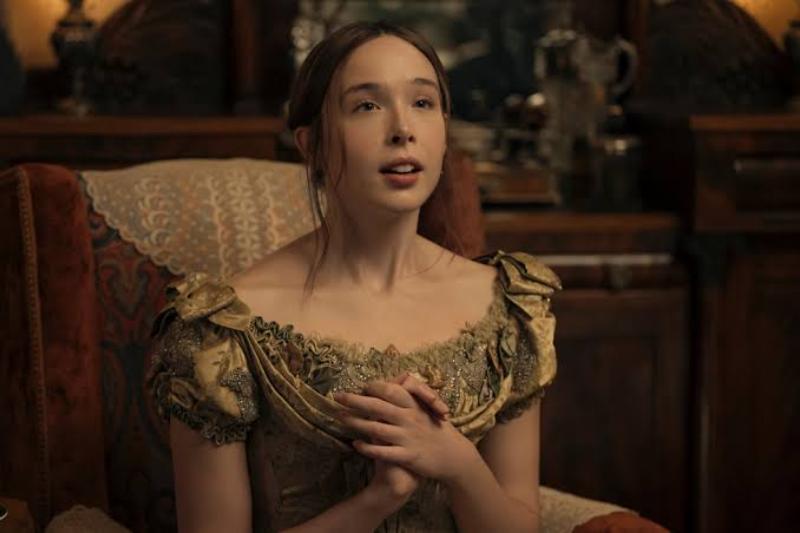
That shift arrives with ‘Monster: The Lizzie Borden Story’, the fourth chapter in the anthology, which turns its gaze onto the first alleged female killer in franchise history. Co-created by Ian Brennan, the eight-episode season stars Ella Beatty as Lizzie Borden, alongside Charlie Hunnam as her father Andrew Borden and Rebecca Hall as stepmother Abby Borden. Unlike previous subjects who ended up behind bars, Lizzie Borden stands apart as an accused figure who walked away a free woman.
To capture the complicated psychology of the Victorian household, the cast immersed themselves into the era’s severe social boundaries. Reflecting on collaborating with co-star Sarah Paulson on set, Ella Beatty explained, “She’s one of my very best friends in the world,” in an interview with TODAY, adding that “to get to work together again is very special.” Meanwhile, Hunnam maintained, “I never felt like we were sensationalizing it,” speaking to The Hollywood Reporter, noting that the cast strove to avoid anything gratuitous while depicting real historical figures.
The Bloodshed in Fall River and Family Discord
The nightmare that inspired ‘Monster: The Lizzie Borden Story’ unfolded on the morning of August 4, 1892, in the industrial town of Fall River, Massachusetts. Inside the modest Borden family home, 64-year-old Abby Borden was struck down while making a bed in the guest room. Roughly an hour and a half later, her 69-year-old husband Andrew Borden was bludgeoned to death while napping downstairs.
While folklore recites the famous rhyme claiming Abby received 40 whacks and Andrew 41, medical examiners revealed a slightly different yet gruesome reality. Autopsies determined that Abby suffered 19 hatchet strikes to her head and neck, whereas Andrew sustained 10 or 11 devastating blows. The sheer brutality of the assaults indicated an intense, personal rage directed specifically at the elderly couple.
Investigators quickly uncovered simmering resentment inside the austere household on Second Street. Andrew was an exceptionally wealthy businessman with real estate assets exceeding $300,000, yet he refused to install modern plumbing and imposed extreme frugality on his daughters. Tensions boiled over shortly before the murders when Andrew slaughtered Lizzie’s beloved pet pigeons in the barn, deepening her intense alienation.
The Flawed Investigation and the 1893 Trial
Suspicion fell squarely on 32-year-old Lizzie, who was present in the house alongside maid Bridget Sullivan during the window of both killings. Detectives struggled to secure physical evidence, especially after discovering that Lizzie burned a blue dress in the kitchen stove days later, claiming it had paint stains. Furthermore, her erratic statements at the initial inquest were excluded from trial because authorities questioned her without legal counsel while she was sedated.
When the case reached the Superior Court in New Bedford in June 1893, Victorian societal expectations proved to be Lizzie’s greatest defense. An all-male jury could not reconcile the image of a devout, churchgoing gentlewoman with a vicious double hatchet murder. After deliberating for only an hour and a half, the jury returned a verdict of not guilty, sparking nationwide debate.
Life After Acquittal and the Pop-Culture Legacy
Following the trial, Lizzie and her sister Emma inherited Andrew’s fortune and purchased a grand Victorian mansion known as Maplecroft in the affluent Hill neighborhood of Fall River. Despite her legal exoneration, local high society permanently shunned her, prompting Lizzie to adopt the name Lizbeth and forge close friendships with theater artists. She lived in relative seclusion until her death from pneumonia in 1927 at age 66.
In adapting the century-old mystery, ‘Monster: The Lizzie Borden Story’ weaves historical fact with heightened psychological fiction to explore the constraints placed on women of that era. By contrasting domestic repression with gruesome folklore, the series underscores why the case remains an immortal American legend. More than 130 years later, the truth about what happened inside that Fall River home remains shrouded in silence.
Do you believe Lizzie Borden was truly innocent of the brutal Fall River slayings, or did Victorian social biases help a killer escape justice—leave your thoughts in the comments below!
Have something to add? Let us know in the comments below!