
How to Watch the ‘Resident Evil’ Movies in Order: Navigating Every Live-Action Timeline
Video game adaptations spent decades struggling against an unforgiving cinematic curse before establishing enduring cultural footprints and reliable box office dominance. Capcom redefined that landscape at the dawn of the millennium by leaning into visceral biohazard survival, sinister pharmaceutical corporations, and unstoppable undead outbreaks.
Across more than two decades, the live-action franchise has expanded into a global cinematic powerhouse that generated over $1.2 billion in worldwide ticket sales. However, diving into this sprawling cinematic library requires understanding that the overarching narrative does not belong to a single, continuous storyline. Instead, the property fractured across three completely distinct live-action continuities that each demand their own viewing strategy.
The Alice Saga: The Original Paul W.S. Anderson Continuity
For moviegoers seeking the longest continuous live-action storyline, the original saga revolves entirely around Milla Jovovich as Alice, an original protagonist navigating escalating global devastation. Watching these six films in chronological release order tracks the worldwide collapse caused by the Umbrella Corporation’s catastrophic T-virus. Reflecting on the enduring cultural impact of the original series, Jovovich observed to Collider that “this franchise is unique,” emphasizing that “the thing the franchise will be remembered for” remains “the passion” from both devoted fans and vocal skeptics.
The journey begins with ‘Resident Evil’ (2002), confining Alice and an elite commando squad inside the underground research facility known as the Hive. Alexander Witt stepped in to direct ‘Resident Evil: Apocalypse’ (2004), shifting the viral chaos into the doomed streets of Raccoon City alongside iconic heroine Jill Valentine. This sequel unleashed the bio-organic juggernaut Nemesis and chronicled the nuclear eradication of the infected metropolis.
Russell Mulcahy steered the franchise toward a desert wasteland in ‘Resident Evil: Extinction’ (2007), examining global desertification, nomadic survivor convoys, and Alice clones. Original director Paul W.S. Anderson returned to helm ‘Resident Evil: Afterlife’ (2010), utilizing cutting-edge three-dimensional cameras as Alice launched an assault on Umbrella’s fortified Tokyo facility. That chapter reunited Alice with Claire Redfield and featured an acrobatic rooftop showdown against Albert Wesker.
The scale widened further in ‘Resident Evil: Retribution’ (2012), staging elaborate underground battle simulations with legacy figures like Leon S. Kennedy and Ada Wong. Anderson then brought the six-part saga to a thunderous close with ‘Resident Evil: The Final Chapter’ (2016). Alice returned to the ruins of the Hive to release an airborne cure and uncover the truth behind her synthetic origin.
The Standalone Reboots: Fresh Visions and Grounded Terror
Following Alice’s conclusion, Constantin Film abandoned the sci-fi action formula to realign the property with Capcom’s original survival-horror roots. Director Johannes Roberts launched a complete narrative reboot with ‘Resident Evil: Welcome to Raccoon City’ (2021), combining the storylines of Capcom’s first two PlayStation games into one fateful night in 1998. Discussing that stylistic shift in an interview with ComicBook.com, Roberts explained that his primary goal was reclaiming atmospheric dread, stating, “I’m a horror guy,” before declaring, “Let’s make a scary movie again”.
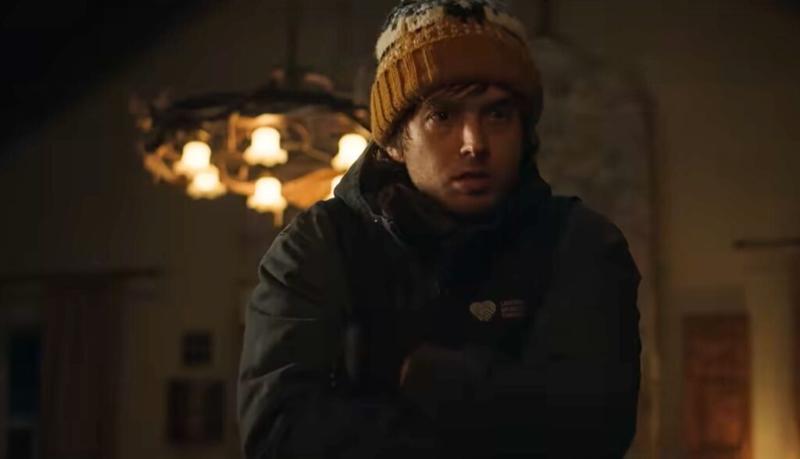
The cinematic universe reset once more in 2026 when filmmaker Zach Cregger delivered a radically inventive standalone vision titled simply ‘Resident Evil’ (2026). Written by Cregger and Shay Hatten, the story follows an ordinary medical courier named Bryan, played by Austin Abrams, who encounters grotesque biological mutations during an urgent snowy transport run into Raccoon City. Discussing his creative intentions with PlayStation Blog, Cregger revealed that “the survival horror mechanics of moving slow and with deliberation” remained vital to his vision, adding, “I wanted to tell a story that could take place in the Resident Evil world, but wasn’t telling a story that the games had already told”.
Because neither 2021’s reboot nor the 2026 installment connect narratively to the previous movies or to each other, audiences can watch either film as an independent survival-horror experience. The simplest approach remains watching all eight live-action theatrical features in release order, allowing viewers to appreciate how Hollywood transformed survival horror from stylized early-2000s action into pure contemporary dread. Whether viewers prefer Alice’s superheroic gunplay or Bryan’s desperate scramble for survival, each distinct timeline offers an entertaining window into biohazard terror.
Which live-action ‘Resident Evil’ timeline do you enjoy the most, and where does the newest film rank for you?
Have something to add? Let us know in the comments below!