
What Is ‘The Love Hypothesis’ Based On? The Secret Origins Behind the Bestseller
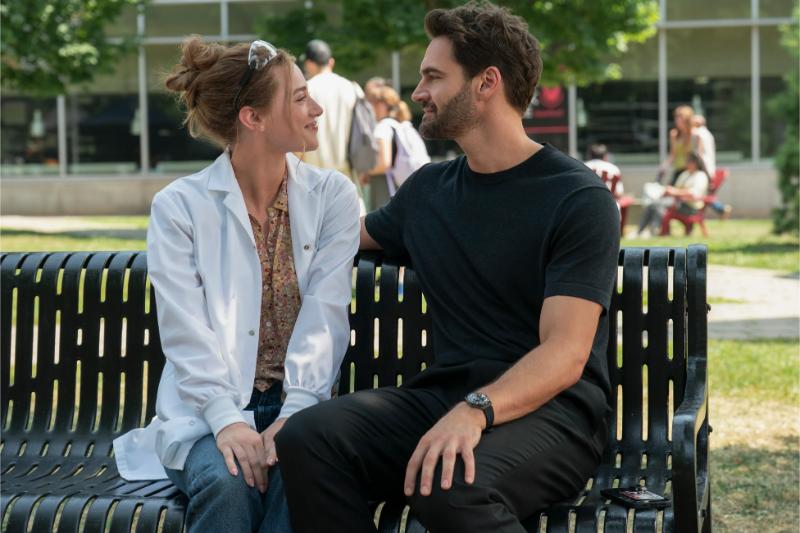
In recent years, the contemporary romance genre has experienced an extraordinary renaissance, completely reshaping the publishing industry and capturing the imagination of readers worldwide. Dedicated internet communities and organic social platforms have fundamentally dismantled traditional literary gatekeeping, transforming viral book recommendations into undeniable commercial juggernauts. This broader cultural movement has demonstrated that emotionally resonant character journeys and comforting genre tropes hold enormous power in modern media.
Few contemporary releases have illustrated this shift quite like the runaway 2021 sensation ‘The Love Hypothesis’, written under the pen name Ali Hazelwood. Set within the competitive academic corridors of Stanford University laboratories, the story follows third-year doctoral candidate Olive Smith after she panics and kisses an austere, notoriously abrasive faculty member named Dr. Adam Carlsen. Their mutual agreement to maintain an elaborate fake-dating scheme swiftly captivated millions of readers and established the novel as a reigning benchmark for modern workplace romantic comedies.
From Fanfiction Archives to Mainstream Phenomenon
However, long before the book conquered global bestseller rankings and dominated bookstore display tables, the narrative developed from an entirely different creative universe. Rather than starting as an original literary manuscript submitted through conventional publishing avenues, the story originated as an alternate-universe fanfiction project inspired by the blockbuster film ‘Star Wars: The Force Awakens’. Hazelwood penned the sprawling story on the creative sharing platform Archive of Our Own, focusing intensely on the intricate dynamic between sequel trilogy characters Rey and Kylo Ren.
Within online fan communities, that dramatic dynamic has long been celebrated under the portmanteau “Reylo,” inspiring countless creative tributes across social networks. Hazelwood originally shared her serialized romance under the internet pseudonym “Ever-so-reylo,” titling the popular episodic narrative ‘Head Over Feet’. The multi-chapter story transported the Force-sensitive rivals out of space opera battles and placed them into the grueling world of academic laboratory politics, transforming galactic warfare into intense campus friction.
Translating the Sequel Trilogy into Academia
When literary agents realized the story possessed a massive, dedicated following, Hazelwood began revising the narrative to transition the characters into a standalone commercial romance. Dr. Adam Carlsen retained the striking physical presence, dark demeanor, and towering stature of actor Adam Driver, even carrying the performer’s first name into the final print version. Meanwhile, Olive Smith channeled the fierce determination and resourcefulness of Daisy Ridley’s cinematic protagonist, mirroring her journey as an ambitious woman striving to carve out her own scientific identity.
The transition also allowed Hazelwood to infuse the story with authentic personal experience, drawing directly from her real-life career as an Italian neuroscientist and academic professor. “I was really, really into writing fanfiction, first for the ‘Star Trek’ fandom and then for the ‘Star Wars’ fandom,” Hazelwood explained in an interview with Collider, highlighting how online writing networks fostered her creative growth. “And while I was in that kind of mood, my agent started reading my fanfiction on AO3 and then she reached out with a DM.”
Visual tributes to the galaxy far, far away even survived the traditional publishing process, notably on the novel’s widely recognized illustrated cover designed by Lilith Phillips. The cover artwork clearly depicts an imposing, broad-shouldered man with dark hair leaning down beside an expressive, petite brunette clad in a white laboratory coat. Astute readers immediately noticed the unmistakable physical likeness to Adam Driver and Daisy Ridley, which sparked widespread recognition and catalyzed a tidal wave of supportive online discourse.
Hollywood and the Rise of Fandom Adaptations
The astonishing trajectory of Hazelwood’s debut novel highlights a burgeoning entertainment pipeline in which grassroots fandom creations seamlessly transition into high-profile screen properties. Following an intense bidding war for the adaptation rights, Deadline reported that Bisous Pictures and MRC Film partnered directly with the author to adapt the beloved story into a feature film. The cinematic project, directed by Claire Scanlon, underscores how digital reading subcultures now hold legitimate power to influence major studio development slates.
Hazelwood’s remarkable journey from anonymous hobbyist to internationally celebrated author proves that passionate online fan culture can fundamentally revitalize modern commercial literature. By translating beloved cinematic chemistry through a grounded, emotionally intricate lens, she demonstrated that digital writing spaces offer invaluable training grounds for contemporary storytellers. What originally began as a creative tribute to a beloved franchise has ultimately rewritten the playbook for how modern romance reaches global audiences.
Let us know in the comments below what you think about the unexpected ‘Star Wars’ origins of ‘The Love Hypothesis’ and how the novel translates to the screen.
Have something to add? Let us know in the comments below!