
Where Does ‘Forgotten Island’ Take Place? Exploring DreamWorks’ Filipino Fantasy Settings
In recent years, the animation landscape has experienced a vibrant evolution, shifting away from generic fairytale backdrops toward deeply specific, richly textured cultural worlds. Audiences across the globe have embraced major studio productions that prioritize authentic environmental storytelling alongside boundary-pushing visual craftsmanship. Amid this ongoing renaissance, widespread curiosity has surged around where the enchanting cinematic universe of DreamWorks Animation’s latest original adventure, ‘Forgotten Island’, actually unfolds.
Following the breakout artistic success of recent celebrated projects, filmmakers Joel Crawford and Januel Mercado sought to craft a narrative backdrop that felt thoroughly grounded yet endlessly imaginative. Rather than dropping viewers into a nondescript fantasy territory, the creative team envisioned an immersive tapestry shaped by generational memories and distinct community bonds. That ambitious pursuit led to a storytelling framework split between two starkly contrasting realms designed to test the limits of lifelong connection.
The vibrant narrative of ‘Forgotten Island’ primarily takes place in the Philippines during the 1990s before journeying into the supernatural realm of Nakali. In the film’s grounded opening acts, the story immerses viewers in an analog Philippine era brimming with vintage passenger jeepneys, tangled urban powerlines, cassette mixtapes, and lively schoolyards. This pre-digital environment serves as the emotional bedrock for lifelong best friends Josephine Cleopatra “Jo” Yuson and Raissa Molina as they stand on the precipice of adulthood.
The Nostalgic Reality of 1990s Manila
The human side of the journey begins in Manila, capturing a formative moment when Raissa prepares to depart for university in the United States while Jo remains behind. This looming transition introduces bittersweet emotional stakes, anchoring the colorful spectacle in the universal pain of childhood friends confronting separate life trajectories. By rooting the protagonists in a specific historical decade, the filmmakers celebrate a nostalgic period defined by tangible keepsakes like handwritten notes and handmade friendship bracelets.
For the cast and crew, framing the story in the Philippines was essential to preserving an authentic cultural identity on a major studio canvas. Voice actress Liza Soberano emphasized this intimate connection, explaining, “I find that I gravitate towards Filipino people just because that’s where I find the most familiarity and safety. I definitely feel myself embracing my Filipino culture even more now that I’m away from it,” in an interview with Inquirer Entertainment.
That cultural grounding extends far beyond architectural backdrops into the everyday traditions, childhood games, and beloved dishes that populate the characters’ neighborhood. Highlighting how rare and special such visual representation remains in mainstream Hollywood animation, Soberano reflected, “Finally, Filipino dishes are now animated and that was so exciting and cool for me to see,” as reported by ABS-CBN News.
Entering the Mythical Realm of Nakali
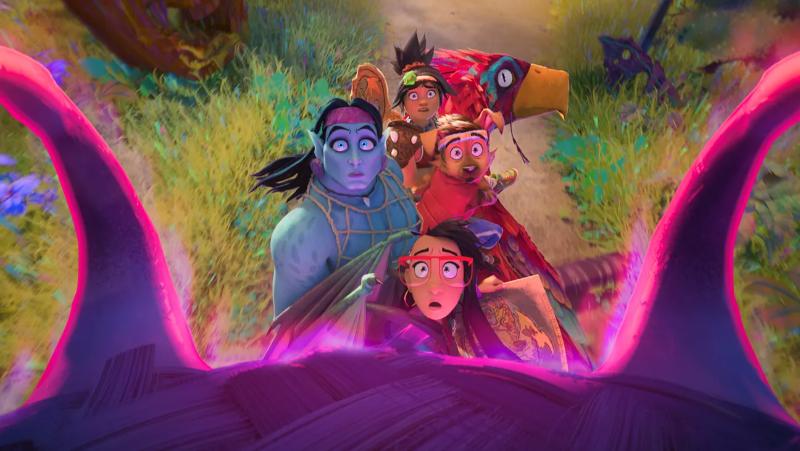
The film undergoes a dramatic narrative shift on the duo’s final evening together when an enchanted sand dollar unseals a portal into Nakali. Nakali exists as an ancient, forgotten island hidden outside conventional space and time, heavily inspired by centuries of Philippine folklore and mythological legends. Illuminated by multiple glowing celestial bodies, this lush tropical environment introduces audiences to a dense paradise teeming with magical flora and whimsical creatures.
Unlike traditional animated sanctuaries, Nakali functions as both an alluring wonderland and a treacherous psychological obstacle course for mortal visitors. The magical territory is home to memorable allies like the neurotic were-dog Raww, as well as terrifying adversaries including the legendary, predatory Manananggal. Surviving the perilous wilderness requires the protagonists to confront these folkloric entities while searching for a mystical talisman capable of reopening the passage home.
Why Nakali’s Supernatural Rules Matter
The greatest danger of Nakali lies within its peculiar supernatural enchantment, which gradually devours the personal memories of anyone wandering its shores. Escaping back to the human world forces Jo and Raissa to risk sacrificing the memories of their cherished friendship forever. This fantastical condition transforms the setting into a literal manifestation of the emotional distance that often threatens to pull childhood companions apart.
By balancing the sun-drenched realism of 1990s Manila with the mythical hazards of Nakali, ‘Forgotten Island’ crafts a deeply poignant coming-of-age odyssey. The production illustrates that regardless of physical distance or supernatural trials, formative childhood bonds remain permanently etched into the heart of who we are. It is an adventurous exploration of location, memory, and heritage that expands the narrative horizons of modern studio animation.
What did you think of the dual settings and folklore showcased throughout ‘Forgotten Island’, and did the film’s nostalgic atmosphere resonate with you?
Have something to add? Let us know in the comments below!